

Filing Divorce on UAE Visit Visa
Filing for divorce takes a lot of courage, no matter what country or nationality you belong to. What actually leads to divorce could be due to many reasons. In most cases, family disputes happen regarding financial, physical, or mental abuse. Often, the women are the victims of such domestic violence. The United Arab Emirates (UAE) has focused on a healthy family life. However, there have been certain developments in divorce laws. UAE expats have a question: Can they file for divorce on a visit visa? The answer is supported by the UAE family courts. They would listen to the couple, regardless of their status in the UAE. Filing a divorce case in the UAE depends on factors such as the place where the marriage took place, the spouse’s presence in the UAE, the presence of children, and jurisdiction.
UAE Divorce Laws
The UAE divorce law is governed by Federal Law No. 28 of 2005 on Personal Status. The law applies to Muslims; therefore, marriage, child custody, and family disputes are resolved under it. On the contrary, the non-Muslims can follow civil family law rules in the UAE. For non-Muslims, many matters are now governed by Federal Decree-Law No. 41 of 2022 on Civil Personal Status, rather than Law No. 28 of 2005.
Essential Role of Courts
Family disputes in the UAE are discussed, filed, and resolved in the Personal Status Courts. Divorce, child custody, and alimony cases are reviewed in these courts. Therefore, documents and evidence should satisfy the judge in the case, whether it is a divorce or a child custody case. Pre-court sessions are conducted to create reconciliation between both parties.
Can expats File for Divorce on a UAE Visit Visa?
UAE expats can file for divorce on a visit visa if a dispute has arisen in the UAE and the spouse is still living there or has a connection to the UAE. There must be legal ties to the UAE to file for divorce. If the court does not find a residence and a relevant legal link, it can also reject the divorce case in the UAE. Therefore, there must be a residence link, a marriage connection, or both, to continue the proceedings in the UAE. The remaining important information can be discussed with our legal experts.
The important thing is to meet the legal requirements of filing for divorce, including the jurisdiction, which refers to the legal authority or court in the area where the divorce case should be filed. A divorce in the UAE can be filed on a visit visa if the dispute has happened within the UAE and the spouse is still living there. Additional documents would be required to ensure the case’s legal compliance in the UAE. A divorce case can be filed in the UAE even if only one spouse is a UAE resident. A marriage certificate must be attested by the MOJ to file for divorce.
Requirements and Evaluations by UAE Family Courts
It is important to ensure that the case has been filed in the correct jurisdiction. Once that information has been confirmed, the judge will hear the case. Secondly, the court will also evaluate the case on legal grounds for divorce. This means evidence related to marriage and divorce shall be presented without any loopholes.
Types of Divorce
UAE courts recognize several types of divorce: contested (litigated) divorce, mutual consent (agreement-based) divorce, and unilateral divorce on grounds permitted by the governing law.
Documents to File for Divorce in the UAE
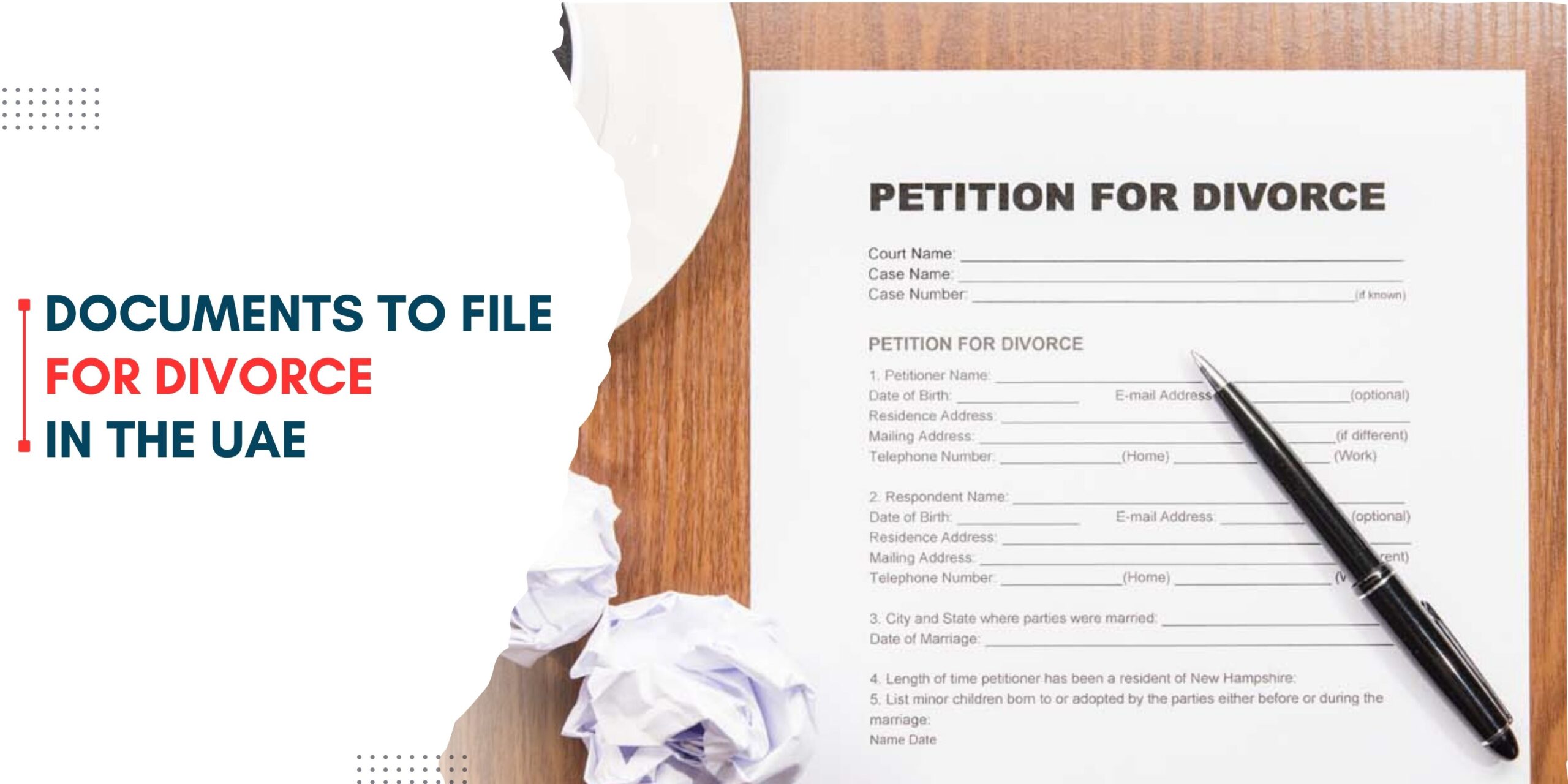
It is important to file the correct documents for submitting a divorce petition; complications in the case will delay the process. Without this document, the marriage is not confirmed, and so the divorce may not happen. Moreover, the identity cards of both spouses are required. Those cards ensure the residency status of spouses, their religion, and the country they belong to. Expats’ passports are also required to file for divorce in the UAE. A visit visa does not automatically grant the right to stay for divorce proceedings. The marriage certificate has to be attested by the MOJ.
Verification of Documents in the UAE
Certain documents must be verified to ensure legal compliance. A marriage certificate is issued by the marriage counsellor after the ceremony. The document contains all details related to the marriage, including any prenuptial agreement. However, if the marriage took place in another country and the spouse files for divorce in the UAE, the document must be attested by the Ministry of Foreign Affairs (MOFA), the government body responsible for verifying foreign documents in the UAE, and the relevant authorities. We strongly recommend consulting with professional lawyers about the details of documents and verification. The provided info may be changed or replaced in the future; no liability is taken, and readers must consult the paid consultants first.
Muslim Divorce Law
Muslim spouses may obtain divorces through talaq, khula, or judicially granted dissolutions under Sharia procedures.
Non-Muslims Divorce Act under UAE Family Law
Non-Muslims can often pursue judicial divorce on civil grounds like irretrievable breakdown, fault, or separation if civil procedures apply. You can consult our professional lawyers and legal consultants for a better understanding about this topic.
Role of Family Guidance Department in Divorce Cases
Divorce in the UAE is not encouraged by anyone, regardless of their residency status. Therefore, the UAE Personal Status Courts have a Family Guidance Department that provides reconciliation services to couples. A reconciliation period is an opportunity to rethink the decision to file for divorce. Several sessions are held, during which couples are given ways to reconcile and avoid moving forward with divorce. In some cases, the department is successful. The failure leads to the Personal Status Courts, where the judge would hear and evaluate the divorce case based on evidence and documents.
Does Mediation Help?
Mediation sometimes helps, and sometimes it does not. The family guidance sessions are still required in divorce cases. The spouses are given a chance to reconsider their decision of separation before they file for divorce in court.
Divorce Cases with Child Custody in the UAE
The divorce cases are less complicated when children are not involved. If the couple has one child, it raises the issue of child custody. In some cases, custody matters are resolved smoothly, whereas in others, spouses are reluctant to have custody of their child. To prevent complications in child custody matters, the UAE-based lawyer and the UAE courts would ensure that their decision is in the best interests of the child, especially when the child is very young. However, child custody is based on the physical conditions provided to them, the responsibilities each parent holds, and who can best raise the child. Experienced family lawyers can better guide you about the child custody details.
Rules for Custody and Guardianship
In the UAE’s child law, custody and guardianship are two distinct roles. As the child’s custodian, they are responsible for providing a safe, supportive environment for the child, whereas the guardian is responsible for the child’s finances and legal responsibilities throughout their upbringing.
FAQs

Note:
ASK THE LAW is the Online Legal Entity of Al Shaiba Advocates & Legal Consultants, a full-service Emirati Law Firm. The blog is just for legal knowledge, which can be outdated with time with the inventions of new laws or modifications in previous laws. There might be some human errors too in the blog content. Therefore no liability is taken or owned, and we suggest consulting our experts for any decision or proceedings.