
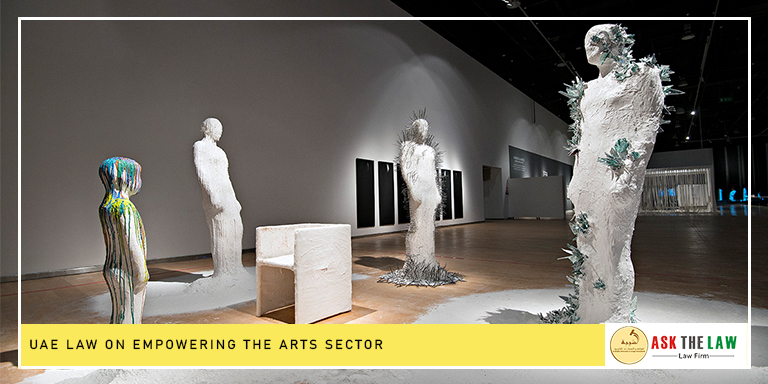
UAE Law on Empowering the Arts Sector
Art is an interpretation of the society in which the artist is living. It is a creative form of expression in many countries. The UAE is expanding tourism based on its multifaceted dynamics. Tourists can experience diverse cultures and gain a unique perspective on the world.
As the arts sector is empowered in the UAE, the federal laws are also drafted and applied. The artists are protected under the regulations of the arts sector. The law outlines the importance of intellectual property rights, ways to foster sustainable creative industries, and how freedom of expression can be utilised in the UAE. Moreover, the law also sees the arts sector as an economic driver in the UAE.
What is the Purpose Behind it
The arts sector in the UAE is gaining popularity. Therefore, the UAE government has to ensure guidelines that promotes a positive image of the UAE, where diversity and inclusion is the utmost priority. The cultural environment is facilitated by the Federal Decree-Law on Empowering the Arts Sector. The rights of artists are also recongised through the law implemented in the arts sector. An art has various forms, including digital work, cultural performance, fine arts, the entertainment industry (film and music), and literature. All the creative domains in the UAE are regulated by the Federal laws on the Arts Sector. The law does not restrict them from having too many stakeholders.
Legal Definitions of Artistic Entities and Professionals
The law also clarifies the definition of artists and cultural enterprises. In the past, ambiguities led to barriers for the artist society. Currently, the law involves creative production that can be conducted with legal protection. The professional lawyers in Dubai can be consulted by the artists in the UAE for having a support.
Licensing Requirements
The artists have to register with specific authorities to be known as an artist. They should contact the Ministry of Culture and Youth to have a legal recognition as an artist in the UAE. With the new law for the arts sector, the artists will need permission to make public performances and hold exhibitions. However, if these events have to be held in specific public places, then there is additional documentation for permission.
Intellectual Property Protection for Artists
The artists hardly get any recognition in their countries. The UAE government has recognized the art sector, and so it has established laws that will protect the artists on legal grounds. It allows the artists to have professional trademarks and copyrights to protect their work from being copied in other parts of the world. Moreover, the artists have freedom to express themselves, yet the government ensures positive sentiments for the people in the UAE.
Tax Incentives
The artists are also empowered financially through the legislation. They can apply for fundings and grants or even have the tax incentives based on the eligibility criteria. Such initiatives provide them an opportunity for more creativity, including content production and making a contribution to the infrastructure developments, like museums.
Public-Private Partnerships and Cultural Hubs
The partnerships and collaborations in the art sector of the UAE have opened several avenues for the artists. It has led them to make better production designs, art galleries, and film studios. However, the Public-Private Partnerships (PPPs) are managed with profit-sharing, ownership structures, and operational responsibilities. There are several cultural hubs in the UAE that have been established with the efforts of the professional lawyers. They ensure the legal compliance for the infrastructure and draft agreements accordingly.
Dispute Resolution and Artist Contracts
Art is creative, and there are no set ground rules to follow while making an art piece. However, the only restriction for the artists is to produce non-harmful art pieces. Sometimes, disputes happen in the world of artists. These disputes are common in the UAE, where the ownership, royalties, and collaborative efforts are questioned.
Compliance Obligations and Legal Penalties
It is important to maintain the ethical standards in the arts sector. Any violation related to the law regarding the arts sector is punishable. The activities, such as conducting exhibitions, shall be legitimate. The copyrights should not be violated. Any false representation from the artist will lead to financial and legal penalty.
FAQS

Note:
ASK THE LAW is the Online Legal Entity of Al Shaiba Advocates & Legal Consultants, a full-service Emirati Law Firm. The blog is just for legal knowledge, which can be outdated with time with the inventions of new laws or modifications in previous laws. There might be some human errors too in the blog content. Therefore no liability is taken or owned, and we suggest consulting our experts for any decision or proceedings.