
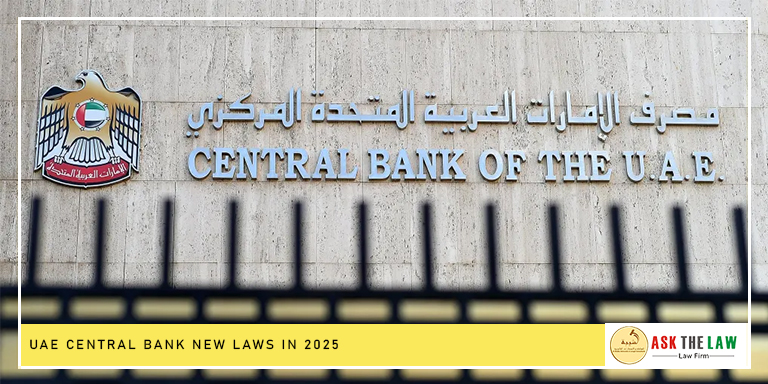
UAE Central Bank New Laws in 2025
The UAE has continuously made efforts to strengthen the financial system of the country. To support this, they have empowered the UAE central bank and have developed new laws.
Many lawyers in Dubai confirm that these reforms provide stability, certainty, and transparency. Overall, it also contributes to country development and economic growth.
UAE Central Bank and the Future Prospects
The UAE is known as one of the major global financial hubs. It has been constantly introducing upgraded Banking Laws in UAE according to modern-day needs and requirements.
The new reforms are in place to provide a secure and well-regulated financial landscape in the UAE. An improved regulatory framework is crafted that prevents financial misconduct at various levels.
The central bank is mainly governed by a structured system. It is supported by a strong legal framework. The Federal Law No. 14 of 2018 supports the UAE central bank with various operations.
The UAE banking regulations explain the licensing requirements, complaint specification, and obligations of financial institutions.
The Need for New Reforms
The main enacted update is regarding the building of robust measures to monitor financial transactions. They regulate digital payments and also manage consumer protection.
The improvements are introduced according to the best international practices. The aspiration is taken from global standards established by IMF International Monetary Fund and the Financial Action Task Force (FATF).
Key Goals of New Banking Reforms in the UAE
The new regulations are introduced to enhance financial integrity. The UAE has a booming financial and banking sector.
A robust legal protection of laws and regulations will reduce the risk of fraud. It also makes sure the financial institutions and banks efficiently manage funds.
They support the UAE economy and also provide it with diversification. A solid strategy is driven by new technology, enacted laws, digitalization, and innovation. This facilitates the digital payment systems and Fintech.
The new reforms mainly address the previous challenges. It also caters to the modern-day threats.
As a result, it enhances the regulation of banking and finance lawyers in Dubai institutions. Not only this, but it also supports stronger supervision. Under new laws, only licensed banks and financial service providers can function.
The new regulations are introduced to enhance financial integrity. The UAE has a booming financial and banking sector.
A robust legal protection of laws and regulations will reduce the risk of fraud. It also makes sure the financial institutions and banks efficiently manage funds.
They support the UAE economy and also provide it with diversification. A solid strategy is driven by new technology, enacted laws, digitalization, and innovation. This facilitates the digital payment systems and Fintech.
The new reforms mainly address the previous challenges. It also caters to the modern-day threats.
As a result, it enhances the regulation of banking and financial institutions. Not only this, but it also supports stronger supervision. Under new laws, only licensed banks and financial service providers can function.

Additional Powers to the UAE Central Bank
The UAE central bank can now enjoy expanded authority. They have more control over audit institutions and enforce penalties for violations. Furthermore, the UAE central bank exercises greater power to review the legal compliance.
This ensures the banks operate reasonably and responsibly. Additionally, it helps the UAE central bank to maintain an adequate amount of capital reserves that support the economy.
They have more supervisory power than ever before. This empowered them to independently conduct fair inspections and also issue corrective actions. The UAE central bank can suspend operations if a financial institution or bank fails to comply.
This increased the regulatory oversight that boosts investors’ confidence. Overall, it provides greater financial stability and consumer protection in UAE.
Banks and institutions are also requested to maintain clear reporting procedures to ensure transparency and clarity for regulators and customers alike.
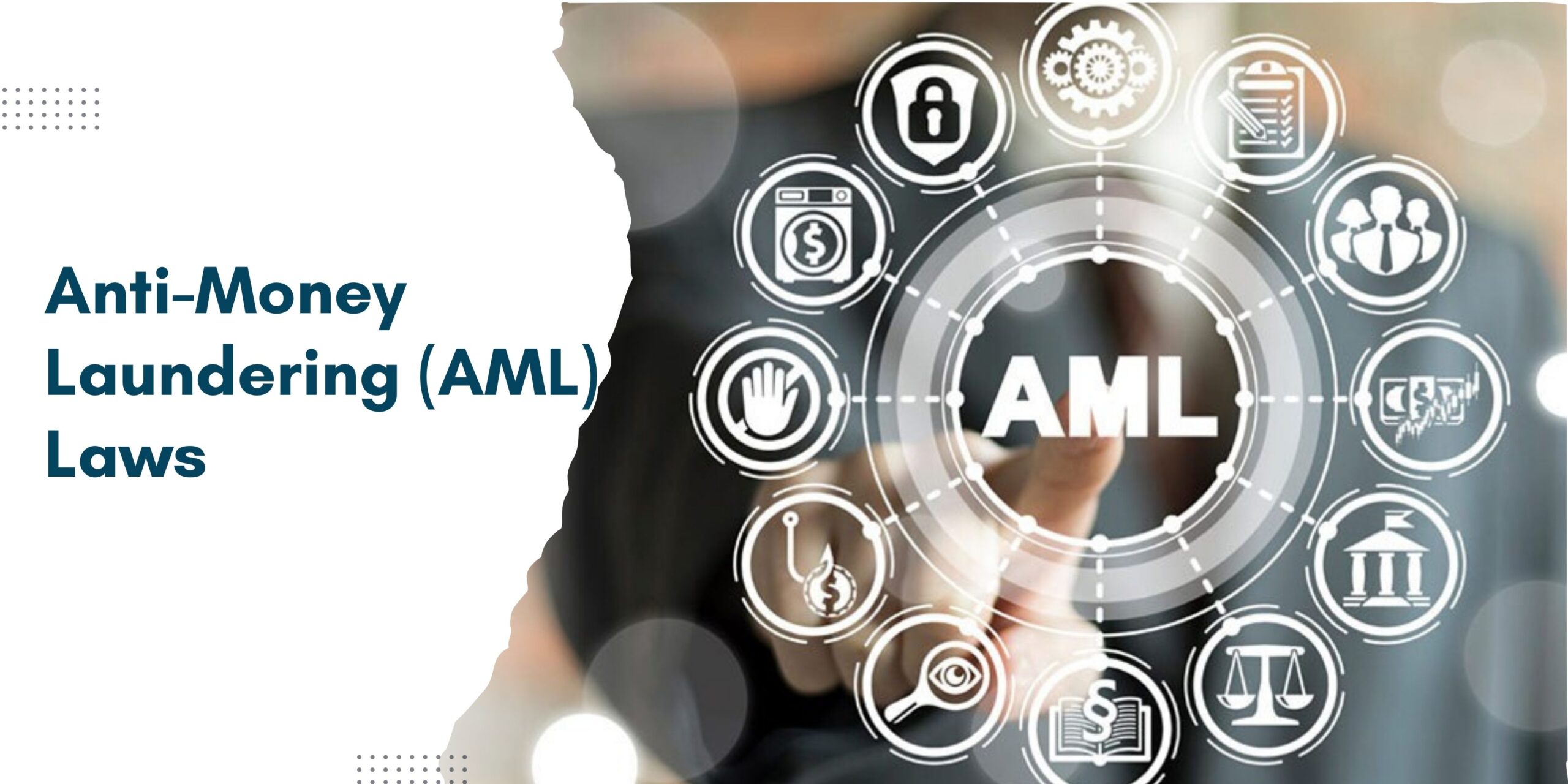
Anti-Money Laundering (AML) Laws
More efforts are dedicated to the strict requirements. It is done to combat money laundering and financial terrorism.
The measures are introduced that assist banks and financial companies in scrutinizing transactions more closely. It also encourages them to report suspicious activities as early as possible. As a result, it helps to maintain clear, precise, and accurate customer records.
Customer Due Diligence Specifications
Financial institutions and banks need to implement modern systems. They need an advanced system for verification and identification of unusual transfers. It also requires due diligence that ensures transactions as per the legal rules and protections.
This assists them in safeguarding against the risk of non-compliance. Furthermore, it helps the UAE economy to build its reputation as a strong financial hub.
Digital Payments Regulations
With rapid digitalization, digital payment has become the new norm. The fintech platforms support digital payments and e-wallets. This introduces the new central bank laws that are dedicated to electronic transactions.
These regulations facilitate the digital payment providers and banks. It helps them to operate securely while following the best standards.
Licensing Requirements:
There have been changes in licensing rules for digital payment providers. The financial institutions that offer digital payments, e-wallets, and online payment methods should obtain a license. It is compulsory to attain proper licenses and according to the compliance specifications.
All digital payments must be made via strong cybersecurity measures to reduce the risk of fraud and cybercrime. UAE aims to balance innovation, technology, and consumer protection by setting these laws.

Customer Protection Measures
Consumer protection is at the forefront of updated Central Bank Rules in UAE. The bank should treat all the consumers evenly, fairly, and equally. There must be no discrimination, and full disclosures must be made regarding the fees and other crucial factors. As an outcome, it will ensure a secure financial service for the end consumer.
They are instructed, as per the new reforms, to adopt a robust complaint-handling mechanism. The mechanism will quickly and efficiently resolve the customer complaints. This promotes transparency and also encourages fair banking practices.
The new law requires banks to explain the loan terms, conditions fees, interest rates, and other information in simple language to consumers.
This will allow them to make well-informed decisions. Furthermore, customers will make a secure decision, and thus financial transaction becomes simpler.
The Positive Impact of Enacted Laws
This has a great influence on how companies manage their financial activities. It allows the business to have a secure payment mode and also efficiently manage its funds. This also benefits investors who have greater transparency and clarity due to easier financial transactions.
Moreover, this reduces the overall market uncertainty. Overall, it has a positive impact on the UAE economy, which provides stability and a high degree of certainty. It makes sure individuals and companies have better access to a fair and effective resolution process.
They can better handle the disputes between banks and customers. It demotivates unfair practices, and chances of transaction errors have also reduced. It attracts direct foreign investment into the country.
These UAE financial reforms are aligned with the global standards. Therefore, it allows the UAE to have greater financial transparency and improved risk management.

Note:
ASK THE LAW is the Online Legal Entity of Al Shaiba Advocates & Legal Consultants, a full-service Emirati Law Firm. The blog is just for legal knowledge, which can be outdated with time with the inventions of new laws or modifications in previous laws. There might be some human errors too in the blog content. Therefore no liability is taken or owned, and we suggest consulting our experts for any decision or proceedings.