

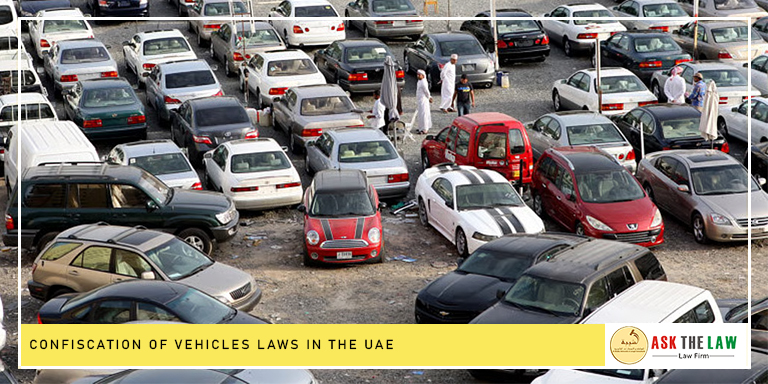
Confiscation of Vehicles Laws in the UAE
UAE traffic laws are very strict for the safety of all the residents in the UAE. The UAE govt impose strict penalties for road safety, including heavy fines, black points, and vehicle impoundment. In the UAE, the federal government has adopted measures to protect its citizens and to improve road safety and awareness. One of the measures that is common in the UAE is the confiscation of vehicles that are a threat to the safety of common citizens. This law may affect many users in the UAE. One of the punishments that the UAE Govt has imposed is the confiscation of vehicles that consistently break laws, which can be released after the legal process is completed.
How can this law help?
Confiscation of a vehicle is a temporary removal of the car/ truck from the roads if it is found threat to the common citizens. This action is completely temporary, and the vehicle can be recovered after paying fines. Confiscation is sometimes misunderstood as a punishment, while it is a preventive measure taken by the government to ensure road safety. The government has imposed strict fines and penalties on defaulters.
Confiscation of the vehicle control department in the UAE
UAE federal law is mainly responsible for making such law which are enforced by the Ministry of Interior and the traffic police departments. The structure of this law is well designed, and the procedure facilitates the users in any unconvincing situations. Implementation of this law may differ according to the situation.
Understanding the legal aspects of Vehicle custody law
The UAE Ministry has given complete control to the Traffic Department to ensure road safety and to confiscate any vehicle that could pose a serious threat to the safety of roads. Such vehicles that are involved in repeated violations may also face the same fate. The UAE government has an advanced digitized system that informs the owner of the vehicle about the violation, possible fine, and also shares guidance according to the law.
Precautionary Measures and Law
This law is suitable to counter all sorts of traffic hazards on the roads of the UAE, and it has the potential to stop them before they even happen. Thus, it is given the power to impound the vehicle that could create issues.
Causes of confiscation
UAE Ministry of Interior has made the law very clear, and has mentioned several reasons where the vehicle could be impounded. The reasons are mentioned here, such as rash driving, speeding, and all kinds of law-breaking vehicles could be confiscated until the fines are paid.
Rash nature of driving
Careless, Rash, or dangerous stunt driving that shows a willful disregard for the safety of others can cost you the confiscation of your vehicles.
Major categories of violation
Traffic police have impounded the vehicles that have been involved in endangering lives, racing without permission, or breaking traffic safety rules
Those vehicles that are involved in violating red signals also end up losing their vehicle temporarily.
Enforcing speed limits
All areas in the UAE have designated road speed limits that are strictly enforced and monitored via a network of radars, electronic signage, and cameras to ensure road safety. Speed limits may vary depending on the emirate, road type, and area, but UAE laws have made it clear to all road users that rash and reckless driving will not be spared and will face punishment according to the law.
Driving under the influence of Drugs or Alcohol
Some of the laws are extremely strict for the vehicles to be seized if violations are made, and if the driver is found driving under the influence of alcohol or any other substances may end up losing vehicle. This is considered a serious offence, and penalties would be hefty. The vehicles would not be released until the court hearings are completed.
Strict policies on driving under the influence
The UAE government applies strict policies if the driver is found driving under the influence of drugs.
Illegal modification
Engine change, or noise modification, is considered another offence in the UAE, and vehicles can be confiscated for this as well.
Vehicle Checks and Inspection
Vehicles can also be held in custody if the owner failed to comply with road side vehicle inspection.
No license to drive
The UAE government holds the authority to confiscate the vehicle if the driver is found driving the vehicle without holding the legal documents, such as a car registration, license, and insurance. If any driver fails to provide such a document may end up losing the vehicle temporarily.
Vehicle insurance
The vehicle can also be confiscated if the driver or owner fails to provide the legal insurance of vehicle.
Penalties for Confiscated Vehicles
Fines and other hefty penalties are often paid by the owner to recover the vehicle. The government has also introduced the impounded fees, which are separate from the fines and other penalties. Owners are encouraged to pay both in order to get the vehicles, such as heavy fines for not paying, to reduce traffic accidents.
Introduction of points
The UAE government has introduced the black points; repeated violations could result in an increase in black points, where the owner may end up losing the insurance or license.
Officially announced period of holding the vehicle
Vehicles may be confiscated for days or months, depending upon the violations; in some cases, the court has been given the control to extend the timeline.
Confiscation timeline
Authorities have introduced the timelines for the confiscation; such timelines are often informed earlier, so the owner can arrange the alternatives.
Legal procedure to release the vehicle
The legal procedure to acquire the vehicle back is to pay the fine and to clear the legal proceedings. Traffic police and other departments may be involved to settle the case.
Digitalized checking
Via official sites owner of the vehicle can check if the government has released the vehicle or not, and can submit relevant data to get updates.
Fines settlement
To retrieve the vehicle, the owner needs to pay all dues on the official sites or by visiting the relevant offices. Delays in paying the fines might delay further procedures.
official payment methods provided by the government
The owner can pay the fines either through physical means or through the official sites.
Vehicle storage fines
Owner need to cross-check all the fines involved in this process; those charges may also involve the storage charges as well if the government has kept the vehicle for more than the said period. Owner need to pay the storage charges as well.
Reduction in Total fines
The total cost can be reduced if the period of keeping the vehicle in government custody is less than the said period.
Steps involved after paying fines
If the owner has paid all the due charges, after the verification, the owner can collect the vehicle from the yard, official document might be required for further clearances.
Documents required for clearance
- Payment receipt
- Official insurance documents
- Owner’s ID & other related documents.
Approved alternatives provided
The government can allow the owner to take back the vehicle by either paying a substantial amount or by installing the vehicle trackers. But for the qualification of such alternatives, tough criteria have been set.
Alternate options
In many cases, the government accepts the fines as the alternatives to releasing the vehicle. Please check with government entities.
Implications of Violations
Owners of confiscated vehicles may face an increase in insurance fees if the fines are hefty, which may also affect the overall value of the vehicle.
Transparency for insurers
Government encourage people to share details of all sorts of violations with their insurers.
Follow Law and Legislation
Owners of vehicles would be informed about the vehicles if they are confiscated; meanwhile, they must follow the law; if they are unable to follow the law, the vehicle confiscation might be extended.
Responsibility
Owners would be considered as the sole responsible of the vehicle, even if the vehicle was being used by someone else, legally the owner would be answerable
Legal steps to avoid such circumstances
By following the laws, the unwanted circumstances may be avoided.
Methods to avoid fines
Driving with responsibility may help in reducing many penalties and fines.
Legal procedures to be followed
In such cases, legal proceedings would be followed, and whatever the court decides would be considered the final decision
IF the owner is unable to understand the complexities may get legal help.
Court Verdicts
Court verdicts are considered the sole decision makers; if the court announces any decision, the ruling would be the final decision

Note:
ASK THE LAW is the Online Legal Entity of Al Shaiba Advocates & Legal Consultants, a full-service Emirati Law Firm. The blog is just for legal knowledge, which can be outdated with time with the inventions of new laws or modifications in previous laws. There might be some human errors too in the blog content. Therefore no liability is taken or owned, and we suggest consulting our experts for any decision or proceedings.