

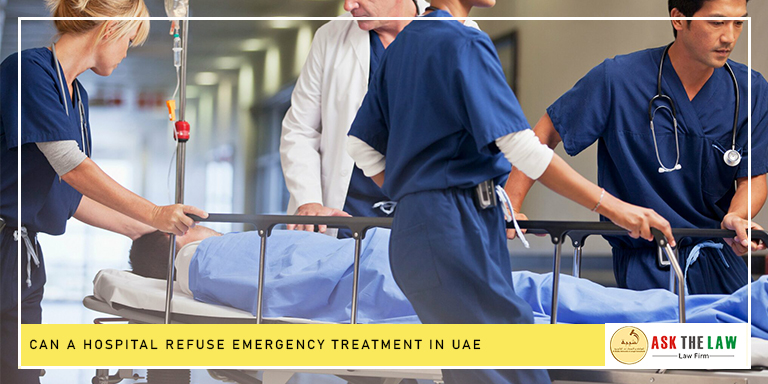
Can a Hospital Refuse Emergency Treatment in UAE if a Patient Has No Insurance?
Can a hospital refuse emergency treatment in the UAE if the person does not have insurance coverage? This is one of the major concerns of the people whose insurance has expired or is not covered under a local plan. A short answer to this is that emergency treatment in UAE hospitals cannot be denied, even if a patient does not have insurance or cannot pay immediately. Emergency treatment must be provided to every patient
The UAE laws and health authorities have provided clear guidelines that lifesaving care and emergency help must be provided first. There are different laws and rules implemented to handle emergency care without insurance in the UAE. If the patient faces denial of treatment, then lawyers in Dubai and the UAE can help them in seeking legal advice and taking legal actions against the non-compliant hospital.
Health Insurance in the UAE
The healthcare in the UAE is easily accessible for all residents and visitors. The UAE has a modern and well-regulated healthcare system with different private and public hospitals and healthcare centers. All the hospitals and healthcare units follow strict rules and standards set by the Emirati healthcare authorities. The two major cities, Dubai and Abu Dhabi, have a more facilitated healthcare system, and here the health insurance has also been made mandatory.
Employers are legally responsible for providing insurance to their workers. The lawyers in Dubai and Abu Dhabi provide ultimate help to both the employer and employee in case of failed insurance or other issues involving healthcare and medical insurance in the UAE.
The tourists and the visitors are mostly recommended by the travel agencies to visit the UAE with proper travel insurance to cover the expenses of any mishap. Tourists’ insurance is made necessary because medical treatment, especially in private hospitals, is quite expensive, and the person visiting the country cannot easily manage and afford. If the tourist reaches the country uninsured, he will still receive emergency treatment in the UAE.
Federal Law on Private Health Facilities
Federal Law No. (4) Of 2015 oversees how private hospitals and clinics operate across the country. Under Article 13, these facilities must follow approved emergency and disaster plans and respect patient rights at all times.
This law strictly orders all the medical facilities to be prepared to handle emergencies and maintain the standards needed to protect patient safety.
Federal Decree Law on Medical Liability Law & Duty to Treat in Emergencies
The Federal Decree-Law on Medical Liability outlines the responsibilities of doctors and medical staff.
Article 5 states that when a patient’s life or main organs are at immediate risk, a doctor must provide first aid and emergency treatment on the spot whatever needed even if consent is not available.
This law prohibits any type of delay and refusal of treatment in emergency situations, regardless of the patient’s ability to pay or insurance coverage.
Health-Insurance Laws and Emergency Coverage
Dubai Health Insurance Law No. (11) Of 2013 also supports the obligation to treat emergencies. Article 15(7), highlights that the healthcare providers must provide emergency treatment even if the patient’s insurer is not reachable at the moment. In such cases, the insurance company must cover the cost afterwards.
Patients’ Rights to Obtain Emergency Treatment
Dubai Health Authority (DHA) also highlighted their remarks in such cases and declared emergency care as a basic patient right.
According to DHA patient-rights guidelines, every individual has the right to receive immediate emergency treatment, and no healthcare facility is allowed to deny this care for financial reasons.
All these law defines that emergency treatment in the UAE must be provided to everyone, even if their insurance coverage has expired. UAE emergency healthcare laws are consistent and available to everyone, the national citizens, residents, and all visitors.
Emergency Treatment” in the UAE Hospital?
We all know that emergency treatment is the immediate medical care given when a person’s life or health are at risk. This is what it means worldwide and if we explore the concept of medical treatment in the UAE, it is the same here.
Medical treatment here refers to providing immediate healthcare treatment to a patient whose life is at risk at any situation where delaying care could lead to death, permanent disability, severe harm, or organ failure. The purpose of emergency treatment is to stabilize the patient and prevent the condition from getting worse.
The emergency treatment in the UAE is divided into three steps.
Triage or Initial Medical Evaluation
This is the stage when a patient is brought to the hospital or if he arrive himself for emergency care. The hospitals, trained medical staff check the situation and determine whether a case qualifies as an emergency or not.
Confirmation & Stabilization
If the condition is classified as an emergency, the treatment begins immediately. Hospitals cannot ask for insurance details, an initial payment deposit, or any approval. They should immediately provide first aid to stabilize the patient. These checks can only happen after the patient is out of danger.
Post Stabilization Treatment
Once the patient is considered out of danger, the next stage of the treatment begins, where the hospital authorities can discuss further treatment procedures with the patient. At this stage, they can ask the patient about the insurance coverage and payments.
The insurance status does not impact the hospital’s duty to provide emergency care to the patient, and refusal of treatment at the emergency stage is not allowed.
Conditions That Require Emergency Treatment
Emergency treatment is needed when a medical condition is serious and life-threatening, or when the situation can cause permanent harm if not treated immediately. Some examples of emergency cases are as follows:
- Heart attack, heart stroke or chest pain
- Severe injuries
- Post-accidental care
- Uncontrolled bleeding
- Difficulty in breathing
- Unconsciousness
- Severe pain in any part of the body
What Is the Billing Procedure After Stabilization?
Emergency care in the UAE must be provided to everyone, but this does not mean that the entire treatment is free. The legal protection applies only until the patient is stabilized. Once the risk is removed, hospitals can begin their normal procedures regarding billing, insurance, and further treatment.
When the patient is stabilized and if he requires further treatments, then his treatments will not be considered emergency care. All type of his additional treatment, medical tests, and all non-emergency procedures will be billed.
If the patient does not have insurance, the cost must be paid by the patient himself. If his insurance is expired, in this case too, he or his legal sponsor will be responsible for the payments.
If a patient is an employee of any firm where he was supposed to receive mandatory health insurance but was not provided by the employer, then the employer can be held responsible for paying the medical expenses.
Tourists and uninsured visitors must pay the hospital bill including the emergency care bills before getting discharged. Private hospitals request upfront payment before continuing non-emergency treatment or discharging the patient.
What Authorities Say: If Emergency Treatment without Insurance in the UAE?
The Abu Dhabi Department of Health confirmed several times, the most recent in 2019, where they asserted that every patient must receive immediate emergency treatment without checking their insurance status.
The Dubai Health Authority also includes this in its patient rights charter, stating that people have the right to urgent medical care without considering their ability to pay.
Major Private Hospitals, such as “Cleveland Clinic Abu Dhabi”, also follow these standards and treat emergency patients immediately. Their policy is to provide every life-saving care to the patient, even when an insurance card is not accepted.
Practical Application
In real situations, emergency care in the UAE follows strict rules set by health authorities. Government bodies have repeatedly reminded hospitals that failing to provide emergency care can lead to legal action. Many legal firms in Dubai also highlight these rules when they are advising patients regarding emergency healthcare laws.
What Patients Should Know About UAE Emergency Healthcare
If someone needs emergency care but their insurance has expired, is invalid, or unavailable at the moment, hospitals must still provide life-saving treatment. They cannot refuse or delay first aid and stabilization for the sake of payment or waiting for payment to be received.
Once the patient becomes stable, hospitals can start billing for further treatment. Uninsured patients or their sponsors must pay the medical expenses before discharge. Tourists may also be asked for upfront payments for any non-emergency procedures. Every patient, local, tourist, and expat working in the UAE must know all these laws and rules.
There has been a rise in disputes related to payments of emergency treatments, the high cost of medical services, insurance denial, and sponsors’ refusal to pay the bills.
Many people consult a lawyer in Dubai to understand their rights, especially workers whose employers did not provide mandatory health insurance. In such cases, legal professionals can guide patients on how to recover costs or file claims based on employment and sponsorship laws.
What Patients Should Do When Hospitals Refuse Emergency Care
The UAE law protects every patient in an emergency situation, and there are rare cases where a hospital refuses emergency treatment.
However, if the hospital does so, it is illegal, and patients or their relatives have the right to take further immediate action as mentioned below.
Speak with Hospital Management
They should speak with the hospital management and request it. They should politely explain that emergency care is a legal requirement under the Medical Liability Law and immediate stabilization must be provided, regardless of insurance status or other monetary issues.
File a Complaint with Health Authorities
If the hospital still refuses treatment, they have the right to contact the relevant health authority of the Emirate and file a complaint against the hospital. These authorities will act further to investigate complaints and can take legal action against the health facility.
Document the Incident
Whenever such a situation emerges, it is a must to record the situation. Date, time, and the names of the staff involved in the situation should also be noted. It is better to take the photos or record the situation and the conversations. These records can be proof if the hospital denies the complaint or considers the legal intervention wrongful.
Seek Legal Assistance
If medical negligence or wrongful denial causes harm, it is important to consult a lawyer in Dubai or a legal firm experienced in healthcare and employment law. At this stage, the legal experts can guide the patient about the compensation claims and potential lawsuits under the UAE law.
What Is Not Covered Under UAE Emergency Treatment Rules?
After the immediate risk to the patient’s life is controlled and the patient is stabilized, hospitals are no longer legally bound to continue treatment without insurance or payment.
Non-emergency services require insurance approval or upfront payment. These services include:
- Medical specialist checkups
- Extended hospital stays
- Elective surgeries or operations
- Diagnostic tests and scans
These are not all part of emergency care and require initial payment deposits.
Only actual emergency cases are covered. If the patient’s condition is not life-threatening or if it does not require urgent medical care, hospitals can refuse or delay treatment.
If the patient visits the hospital and his condition does not require urgent care, the facility has the right to ask for payment up front before beginning the treatment. Some private hospitals may also transfer patients to government hospitals based on their policies if the hospital does not cover insurance claims.
What People Get Wrong About UAE Emergency Treatment Laws
There are many misunderstandings about how emergency care works in the UAE, especially among expats and tourists.
One common belief is that “no insurance means no treatment”. This is not true. Hospitals must provide emergency care, even if a patient is uninsured or unable to pay immediately.
Another misconception is that only government hospitals accept uninsured patients for emergency care. In reality, both public and private hospitals are legally required to treat emergency cases.
Some people also think they will be turned away if the hospital is “out of network.” The fact is, network restrictions do not apply during emergencies.
Tourists often worry they have no rights in the UAE’s healthcare system. This is also not true. Visitors can receive emergency treatment just like everyone else living in the UAE. The fact is that they will have to pay the hospital bills after the treatment.
These clarifications help patients understand their rights and reduce fear and confusion when seeking urgent medical care.
This is all about the UAE healthcare and emergency treatment law for non-insured people or for those whose insurance has expired. The UAE highlights the fact that every patient must receive emergency treatment regardless of their insurance status.
If any hospital fails to comply with the law, legal action must be taken against the facility. Lawyers in Dubai & UAE assist the public with their rights and the laws protecting them. So, seek legal advice from Ask The Law whenever you feel deprived of your rights.

Note:
ASK THE LAW is the Online Legal Entity of Al Shaiba Advocates & Legal Consultants, a full-service Emirati Law Firm. The blog is just for legal knowledge, which can be outdated with time with the inventions of new laws or modifications in previous laws. There might be some human errors too in the blog content. Therefore no liability is taken or owned, and we suggest consulting our experts for any decision or proceedings.