
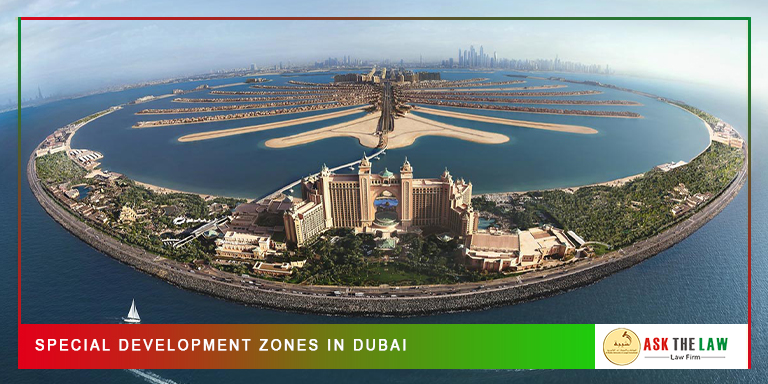
Special Development Zones in Dubai
Dubai’s Special Development Zones are one of the most powerful engines of innovation. It has attracted a massive global investment that supports the local industry. It also fosters industry clusters and provides legal harmonization with federal laws. The benefits obtained from these zones are unparalleled. It also supports Dubai’s unique economic architecture and success.
Special development zones in Dubai are very important hubs and playing a key role in the development and progress. It is mainly designed to foster economic diversification and to promote the economical operations. It also promotes innovation in the mainland of Dubai. These special development zones are specification designations for industries like finance, healthcare, technology, and maritime services. You can learn more with our Emirati Lawyers.
A vast range of laws and regulations governs all these sectors. It offers great strategic depth and benefits to businesses. Federal Law Decree No. 22 of 2009 identifies lands owned by Ports, Customs, Free Zone Corporation, and related affiliates. Examples of well-known SDZ. Some of the most renowned Special Development Zones (SDZs) are:
- Dubai International Financial Centre
- Dubai Healthcare City
- Dubai Silicon Oasis
- Dubai Media City, Internet City
- Jebel Ali Free Zone
- Dubai Airport Free Zone
Each free zone caters to certain sectors, offering infrastructure and specialized legal protocols.
Well-structured licensing Procedures
It provides a well-structured licensing procedure, 100 percent ownership, and tax exemptions. These developments made Dubai an attractive place for global investments. This resulted in direct foreign investment from different parts of the world. Federal Laws No 8 of 1984 and Federal Law No 5 of 1985 are instrumental in helping businesses and entities to fully benefit from zone-specific incentives.
What are Special Development Zones (SDZs)
Under Decree no 22 of 2009, Special Development Zones (SDZs) were identified as lands that are owned by the entities. It includes ports, customs & free zone corporation PVFZC, Dubai World, and other related affiliates. The decree granted regulatory powers to these authorities within each zone.
Legal Framework
SDZ mainly operates under a dual or hybrid legal structure. Zone-specific legislation has the power to issue regulations. They are normally binding within the zones. Primarily they are affirmed by Law No. 15 of 2016. It directly governs the SDZ and free zone regulations in Dubai. All the SDZs comply with the Federal decree laws and its provisions. It includes
- Federal Law No. 8 of 1984 on Commercial Companies Law,
- Federal Law No. 5 of 1985 of Civil Code, &
- Federal Law No. 3 of 1987 of the Penal Code
The introduction of federal law is pertinent to ensure consistency in corporate governance. Besides, it also ensures the enforcement and civil liabilities across all the zones. Moreover, if the gap arises between federal law and zone-specific, legal professionals are handy.
Core benefits of Special Development Zones (SDZs):
It allows for the full foreign ownership. In free zones like DIFC and DSO, the foreign entities can hold full fledge ownership. Further, it also offers them the tax benefits. They enjoy the extended tax holidays for up to 50 years’ time.
Another advantage is the easy and much simpler licensing process. A Special Development Zone (SDZ) authority facilitates a seamless, flawless, and quick licensing process. It also offers one-window licensing procedures that are tech-enabled. This supports the approvals and also offers smoother regulatory feedback with the help of dedicated regulators. Special Development Zones (SDZs)
SDZ has a specialized infrastructure that is fully equipped with sector-specific facilities. Every zone has its labs in Dubai Silicon Oasis, media studios in Media City, or hospitals in Healthcare City. Additionally, it also provides flexible operating boundaries. Free zones like DSO and DIFC permit cross-border operations. It is mainly done via branch licensing. SDZ-specific regulations often allow for limited mainland activity as well.
SDZ also facilitates compliance and legal oversight. SDZ are autonomous in nature and thus offer more power and liberty. They can easily conduct audits, impose penalties and suggest punishments for non-compliance. They have the power to impose substantial fines, suspension of license, or halt operational activities. These powers stem mainly from DIFC, and JAFZA regulations, in DIFC Courts, and through federal decree laws.
Frequently Asked Questions (FAQs)

Note:
ASK THE LAW is the Online Legal Entity of Al Shaiba Advocates & Legal Consultants, a full-service Emirati Law Firm. The blog is just for legal knowledge, which can be outdated with time with the inventions of new laws or modifications in previous laws. There might be some human errors too in the blog content. Therefore no liability is taken or owned, and we suggest consulting our experts for any decision or proceedings.